As I've mentioned earlier in this blog, somehow learning Mandarin in America became tantamount to accessing a luxury or privilege in education. Or worse, yet, it became some kind of signal that a student was gifted or especially talented and intelligent.
Look, learning the Chinese language is hard. Whether it is Mandarin, Cantonese, Shanghainese, Fujianese, or any of the other dialects. But only if you are not a native speaker of these languages, and especially if you are a native speaker of a phonetic language. Tonal homonyms is one thing, the ideogrammatic writing is yet another. There are a lot of built-in challenges that have nothing to do with privilege or luxury or even intelligence.
As Carol Dweck, heralded researcher and thought leader in educational psychology at Stanford, has been advocating, a growth mindset can make all the difference. Her book Mindset: The New Psychology of Success has inspired educators, parents, business and civic leaders to change the way we think about human development in every corner of our lives, from how we run our schools to how business leaders manage, to cultivating fulfilling relationships.
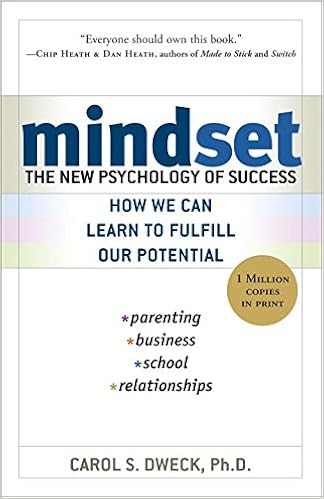
Her work counters the praise-ridden self-esteem movement and shows that tackling something challenging helps the brain to grow. People who adapt to this "growth mindset" - where they want to take on challenges and do not expect the immediate gratification of instant success - are more likely to find long term happiness and success.
The opposite of this Growth Mindset is what she calls the "fixed mindset." People with a fixed mindset believe intelligence is inborn, that one's superiority is evident and manifest without much effort. People with a fixed mindset have a hard time recovering from failure.
I'd like to see more parents apply this Growth Mindset to bilingual education for their kids. It's not easy to learn 2 languages (or even more) while you're a kid. Success takes hard work, and enduring difficulties which means not always feeling good. When your child is feeling discouraged in the classroom or in the face of the entire daunting challenge, Dweck is urging you to guide your child through these feelings - Help your child take on a growth mindset to believe that through repeated effort, s/he can overcome these feelings of discouragement. Eventually, they will transform into feelings of gratification. But only after slogging through the columns of repeated character writing.
I hope Mandarin teachers take this message to heart and stop teaching to low-to-mediocre standards. Tell American parents the truth. Expect more from your students and don't take back down. So what if many of your students are getting B's and C's? If you required your students to write one full page, then stick to that standard. If they only write half the amount on an essay, then let them know by giving them a lower grade. Then it is up to the parents and the students to work together and learn to acquire this growth mindset.
The irony in all this is that hard work and not being coddled is actually a natural aspect of the Chinese culture.
As Dweck writes in her book, "Many people with the fixed mindset think the world needs to change, not them. They feel entitled to something better..." Exactly. Herein lies the problem - Entitlement.
There's no entitlement in learning another language. Either you do it, or you don't, and you can use it, or you cannot. Being able to use that second language doesn't happen just because you showed up. Dweck's research has been unequivocal on this simple point: To achieve anything, you have to work for it. So take on a Growth Mindset, and get to work.
Mandarin Immersion Support
Perspectives on being a parent in a Mandarin Immersion program in the U.S. Best practices, resources, cross-cultural engagements, and myth-busting.
Monday, June 13, 2016
Sunday, June 12, 2016
"Equity and Access" in Education vs. Balancing Needs against Resources
There was a recent article in the NYTimes on China's efforts to redistribute access to the more competitive universities as a force combatting poverty:
China Tries to Redistribute Education to the Poor, Igniting Class Conflict
These battles are all too familiar in the U.S. While I believe these types of efforts and policies merit the respect and goodwill of the general public, it can also be a sign of lazy leadership.
While Mandarin Immersion programs have been getting off the ground here in the U.S., the "equity and access" discourse also took hold in their shaping. Battles broke out at mid-levels (and they continue) amongst parents and educators over who would shape the "access" to "successful" MI. And thusly, who would be the intended beneficiaries in terms of "equity."
I have long held the belief that as the limits of China's economic boom were reached, the interest in the U.S. to learn Mandarin would gradually wane. Americans simply underestimate the scale and complexity of China's own poverty. I, myself, would have never known had I not been able to accompany my father on many trips to China in the 1990's and given tours of efforts in those circles of engineers trying to tackle infrastructure development.
The millions-to-be-made motivation (seriously, how many times did I hear from parents in MI programs that their main aspiration for their kids learning Mandarin was to be able to make money in China?) would fade by the time my kid was in college or grad school, at least. Well, it happened a lot faster. Hehe.
China has its own problems, as this article can attest. The answers do not lie in lazy one-directional policies. For China to improve everyone's plight, there must be as much effort in pushing out talent and technologies, efficient and equitable systems, as there would be the pulling in of promising students from the outer provinces to the big cities. And while the leadership has stated aspirations of doing so, then both communication and comprehensive alignment of policies must be robust.
Access to education has never been completely fair. But could Ms. Cheng the art editor mom in this article be assisted in comprehending that reality in its full, concrete detail?
The battle is, in fact, over numbers in seats (sometimes phrased more crudely, butts-in-seats). As I've explained in this blog, MI programs in America needed the proper number of butts-in-seats that created balance, in order to meet targets for effectiveness. Two-way programs needed the right ratios of EO kids to MP kids (EO=English-Only, MP=Mandarin-Proficient). One-way programs needed to accept that volume was directly proportional to the effectiveness of one, single, lonely MP teacher. And in all cases, parents' own abilities, expectations and implemented supports were directly correlational to results.
China's equity and access problems face the same challenges. If the universities in Beijing, Shanghai and Nanjing accept too many students from the outer problems, then the communities and student-support systems would be overwhelmed by the needs of these students. That is not at all saying that these students are not worthy. But every student, regardless of background, arrives with their own mix of social, emotional and academic needs that require the right mix of support in order to be optimally successful.
Students from these high performing universities are naturally supported by their families who are more likely to be local, than not. While one is struggling through demanding studies, the comforts of home are not far away. This contributes to their "success." A student from a far-flung province doesn't benefit from that easy, accessible comfort. The government would need to provide private, on-demand jet service in order to make the situation more equitable.
"Successful" language education is just like all of education, itself. To be effective, there are myriad social, emotional and academic supports that contribute to success. Many of those supports for effective language education have been largely invisible to Americans. Hence my effort in starting this blog...
In America, the talk is also about access to the schools, as if education lived in the walls of the school buildings, themselves. Education lives in people. If you take all the people out, just like you would gut a house to its basic frame, and nothing else, do you still have a functioning house?
When you overwhelm a school community with needs and not enough resources to meet those needs, people who have resources and can leave will leave, thereby leaving only the high needs. A dynamic community shapes a school. Authentic engagement is necessary. And leadership that is not lazy or dishonest about the realities we face.
I have left 2 high-needs MI schools at this point - one public, one private. In both cases, the balance of needs vs. resources to meet those needs tipped far out of balance to warrant staying. And worse, still, in both cases, the leadership of these schools was lazy. Too lazy to acknowledge the reality of the imbalance of Needs vs. Resources creating the difficulties.
China Tries to Redistribute Education to the Poor, Igniting Class Conflict
BEIJING — Cheng Nan has spent years trying to ensure that her 16-year-old daughter gets into a college near their home in Nanjing, an affluent city in eastern China. She wakes her at 5:30 a.m. to study math and Chinese poetry and packs her schedule so tightly that she has only 20 days of summer vacation.So when officials announced a plan to admit more students from impoverished regions and fewer from Nanjing to local universities, Ms. Cheng was furious. She joined more than 1,000 parents to protest outside government offices, chanting slogans like “Fairness in education!” and demanding a meeting with the provincial governor.“Why should they eat from our bowls?” Ms. Cheng, 46, an art editor at a newspaper, said in an interview. “We are just as hard-working as other families.”
These battles are all too familiar in the U.S. While I believe these types of efforts and policies merit the respect and goodwill of the general public, it can also be a sign of lazy leadership.
While Mandarin Immersion programs have been getting off the ground here in the U.S., the "equity and access" discourse also took hold in their shaping. Battles broke out at mid-levels (and they continue) amongst parents and educators over who would shape the "access" to "successful" MI. And thusly, who would be the intended beneficiaries in terms of "equity."
I have long held the belief that as the limits of China's economic boom were reached, the interest in the U.S. to learn Mandarin would gradually wane. Americans simply underestimate the scale and complexity of China's own poverty. I, myself, would have never known had I not been able to accompany my father on many trips to China in the 1990's and given tours of efforts in those circles of engineers trying to tackle infrastructure development.
The millions-to-be-made motivation (seriously, how many times did I hear from parents in MI programs that their main aspiration for their kids learning Mandarin was to be able to make money in China?) would fade by the time my kid was in college or grad school, at least. Well, it happened a lot faster. Hehe.
China has its own problems, as this article can attest. The answers do not lie in lazy one-directional policies. For China to improve everyone's plight, there must be as much effort in pushing out talent and technologies, efficient and equitable systems, as there would be the pulling in of promising students from the outer provinces to the big cities. And while the leadership has stated aspirations of doing so, then both communication and comprehensive alignment of policies must be robust.
Access to education has never been completely fair. But could Ms. Cheng the art editor mom in this article be assisted in comprehending that reality in its full, concrete detail?
The battle is, in fact, over numbers in seats (sometimes phrased more crudely, butts-in-seats). As I've explained in this blog, MI programs in America needed the proper number of butts-in-seats that created balance, in order to meet targets for effectiveness. Two-way programs needed the right ratios of EO kids to MP kids (EO=English-Only, MP=Mandarin-Proficient). One-way programs needed to accept that volume was directly proportional to the effectiveness of one, single, lonely MP teacher. And in all cases, parents' own abilities, expectations and implemented supports were directly correlational to results.
China's equity and access problems face the same challenges. If the universities in Beijing, Shanghai and Nanjing accept too many students from the outer problems, then the communities and student-support systems would be overwhelmed by the needs of these students. That is not at all saying that these students are not worthy. But every student, regardless of background, arrives with their own mix of social, emotional and academic needs that require the right mix of support in order to be optimally successful.
Students from these high performing universities are naturally supported by their families who are more likely to be local, than not. While one is struggling through demanding studies, the comforts of home are not far away. This contributes to their "success." A student from a far-flung province doesn't benefit from that easy, accessible comfort. The government would need to provide private, on-demand jet service in order to make the situation more equitable.
"Successful" language education is just like all of education, itself. To be effective, there are myriad social, emotional and academic supports that contribute to success. Many of those supports for effective language education have been largely invisible to Americans. Hence my effort in starting this blog...
In America, the talk is also about access to the schools, as if education lived in the walls of the school buildings, themselves. Education lives in people. If you take all the people out, just like you would gut a house to its basic frame, and nothing else, do you still have a functioning house?
When you overwhelm a school community with needs and not enough resources to meet those needs, people who have resources and can leave will leave, thereby leaving only the high needs. A dynamic community shapes a school. Authentic engagement is necessary. And leadership that is not lazy or dishonest about the realities we face.
I have left 2 high-needs MI schools at this point - one public, one private. In both cases, the balance of needs vs. resources to meet those needs tipped far out of balance to warrant staying. And worse, still, in both cases, the leadership of these schools was lazy. Too lazy to acknowledge the reality of the imbalance of Needs vs. Resources creating the difficulties.
Wednesday, June 8, 2016
Simplified vs. Traditional, revisited
Now that my child has spent one year, her 6th grade year, immersed in learning Traditional, rather than Simplified, I wanted to post an update... It was not a difficult transition. She was old enough to understand what was happening and ambitious enough to want to take on the challenge.
When we started MI in kindergarten, I had no idea what Simplified was all about. By the time we made it to 4th grade, my own brain could no longer make out Traditional characters.
But as one advances, many of the Simplified and Traditional characters are, indeed, one and the same - i.e., there is no difference in their written form. I don't know when or why... but it seems like often enough that progressing to Traditional does matter at some point in your kid's Chinese literacy development.
My child has transitioned this past school year, to the point of not necessarily knowing how to read Simplified characters at first glance. So we'll spend the summer reading Simplified texts with a converter table from the back of the textbook. Both the Hanban and Jinan University textbooks have this in the back of each. So we'll just rip it out and put it next to her while she reads.
When we started MI in kindergarten, I had no idea what Simplified was all about. By the time we made it to 4th grade, my own brain could no longer make out Traditional characters.
But as one advances, many of the Simplified and Traditional characters are, indeed, one and the same - i.e., there is no difference in their written form. I don't know when or why... but it seems like often enough that progressing to Traditional does matter at some point in your kid's Chinese literacy development.
My child has transitioned this past school year, to the point of not necessarily knowing how to read Simplified characters at first glance. So we'll spend the summer reading Simplified texts with a converter table from the back of the textbook. Both the Hanban and Jinan University textbooks have this in the back of each. So we'll just rip it out and put it next to her while she reads.
Monday, May 9, 2016
Raising a Bilingual Child, by Barbara Zurer Pearson
Oh, Barbara, if only I had discovered your book when it was first published in 2008! What grief I would have been spared!
Parents, if you are serious about achieving bilingual-ism, then read her book.
Zurer-Pearson covers so many essentials, from the research models to the variations in goals. She highlights parent households of same-language or different languages, bilingual and trilingual families, unevenly multi-linguals, and even issues with heritage bilinguals.
My own success has mirrored the advice she offers, here. So if you are just starting out, this book is worth sifting through!
The model... Did they break the model, or are they being faithful to it?
Now that my child's Mandarin proficiency is humming along at a pace and quality I find reasonable, I've got some time to revisit these posts...
To break up some of the key ideas and highlight them into shorter posts, make the ideas more searchable.
The model matters. The research exists. Your school should be working with a model that has been found to be successful.
So what is your school's supposed model? Ask your teachers, ask your principal. Find out if they even know...
Two-Way Language Immersion is supposed to have no more than 50% of the kids from English-Only backgrounds. (I'm saying English-Only more boldly because I'm writing for American audiences, where we are still very far behind the notion of bilingual and bi-literate proficiency overall.)
Take a look at your child's classroom. If more than half the kids are from a language that is NOT the desired language you want your kid to learn (in this blog's case, Mandarin), then you are in trouble.
There is no getting around it. I still hear parents making all kinds of excuses. But... if... and we do all this extra... besides, our goals are different...we just want some language, not too much...
Yes, I've heard it all before. Forget it. What you will find is that EVERYTHING collapses. Academics, cognitive development... If the model is broken, the model is broken. Things won't "work" the way they are supposed to work.
To break up some of the key ideas and highlight them into shorter posts, make the ideas more searchable.
The model matters. The research exists. Your school should be working with a model that has been found to be successful.
So what is your school's supposed model? Ask your teachers, ask your principal. Find out if they even know...
Two-Way Language Immersion is supposed to have no more than 50% of the kids from English-Only backgrounds. (I'm saying English-Only more boldly because I'm writing for American audiences, where we are still very far behind the notion of bilingual and bi-literate proficiency overall.)
Take a look at your child's classroom. If more than half the kids are from a language that is NOT the desired language you want your kid to learn (in this blog's case, Mandarin), then you are in trouble.
There is no getting around it. I still hear parents making all kinds of excuses. But... if... and we do all this extra... besides, our goals are different...we just want some language, not too much...
Yes, I've heard it all before. Forget it. What you will find is that EVERYTHING collapses. Academics, cognitive development... If the model is broken, the model is broken. Things won't "work" the way they are supposed to work.
Tuesday, November 24, 2015
Math in English, Math in Mandarin...
I have now bailed on our second Mandarin Immersion program. And while you could say we are in yet another one, it's not exactly, technically "immersion."
One of the biggest reasons I bailed is because of the math instruction. From K-4, we have had a lot - and I mean majority in that "a lot" - of math instruction that has been delivered in Mandarin.
While this seems "progressive" or even "advanced" on the surface, it really is not that helpful.
K-1 was math instruction 100% in spoken Mandarin, while the written work was in English. But your kid is just learning to read at that point, so it doesn't seem like a big deal. Numbers are numbers, geometric shapes are geometric shapes, and visual patterns like rows of penguins or candy canes are just...penguin and candy cane pictures.
From 2nd grade through 4th grade, our math instruction was 50% in English and 50% in Mandarin. This time, the written work - story problems - in Mandarin was written in Chinese. While this seems great on the surface, and I was super positive during 2nd grade, because all this reinforced Chinese literacy, there are hidden pitfalls.
The school we were at basically took the entire math curriculum and split it in half. One half was taught in English, while the other half was taught in Chinese. Then there were portions, select lesson plans or skills or units, that the teachers selected to be taught in both languages. The idea was that this select portion would be enough to help the kids stitch together the other concepts and skills which they were only learning in one language. Additionally, since the teaching staff are different for each language, then we are not working with one bilingual teacher who knows what everyone did on a day-to-day basis.
While all this sounds like a good idea on the surface, it was a near failure in my eyes. By the middle of 3rd grade I started to suspect what was going on. By the end of 3rd grade I knew we could not continue. And all through 4th grade, I followed my child's progress in math with tremendous anxiety.
Math reasoning and basic skills were all taking a hit. Since the majority of these skills were only being learned in one language for only 50% of the time that average kids would learn these things, then nothing was being learned well. Chinese language syntax also impacted learning the calculations needed for basic story problem solving, because some of it is flipped nearly opposite in the way you would say something in English (example, how you say fractions). And while this is all great experience for language development, it's not so good for math skills and math reasoning development that is only in its early stages.
And sure, you could say that it just takes more time to be more complete. So, how are you going to further extend the school day? That is what you must do if you keep going like this.
Most of the parents at our school were unaware of this development. You have to be 1) bilingual/bi-literate enough and 2) involved with your kid's homework enough. And maybe 3) at least a minor math geek to figure out the content and sequencing of the math curriculum. I think a select number of parents just assumed math would need bolstering and so they do extra in English.
In any case, my kid's confidence in math was tanking. This was not tolerable. But 2 months of solid math instruction in the hands of a deftly skilled and caring teacher who teaches math 100% in English, and we've been golden. All is good, back on track. My child loves math. Problems in her brain's math reasoning skills all resolved.
In fact, we spent the last 2 months of 4th grade getting extra tutorship in math in Chinese. And that definitely helped my kid believe that she was understanding her teacher during regular math time in Chinese. But I did not see this as a longterm solution.
Here's the thing - little kids are too little to be real translators. Sure, you might hear about high school kids from China testing into advanced classes in American high schools, but that is much more advanced math. That is not "basic skills." Those high school kids got to master basic skills in one language. When they are doing those basic skills in their heads, without talking to you or anyone else because the test is on paper (or a computer), then it's all in Chinese. I guarantee it. They are talking to themselves in Chinese. But the symbolism of advanced analytical mathematics is all the same. Essentially, there is very little English language attached to it.
This is not the same thing as Elementary math.
Not to mention - if you're gonna stay here in America, the math tests to get into a selective high school or college are still all in English.
One of the biggest reasons I bailed is because of the math instruction. From K-4, we have had a lot - and I mean majority in that "a lot" - of math instruction that has been delivered in Mandarin.
While this seems "progressive" or even "advanced" on the surface, it really is not that helpful.
K-1 was math instruction 100% in spoken Mandarin, while the written work was in English. But your kid is just learning to read at that point, so it doesn't seem like a big deal. Numbers are numbers, geometric shapes are geometric shapes, and visual patterns like rows of penguins or candy canes are just...penguin and candy cane pictures.
From 2nd grade through 4th grade, our math instruction was 50% in English and 50% in Mandarin. This time, the written work - story problems - in Mandarin was written in Chinese. While this seems great on the surface, and I was super positive during 2nd grade, because all this reinforced Chinese literacy, there are hidden pitfalls.
The school we were at basically took the entire math curriculum and split it in half. One half was taught in English, while the other half was taught in Chinese. Then there were portions, select lesson plans or skills or units, that the teachers selected to be taught in both languages. The idea was that this select portion would be enough to help the kids stitch together the other concepts and skills which they were only learning in one language. Additionally, since the teaching staff are different for each language, then we are not working with one bilingual teacher who knows what everyone did on a day-to-day basis.
While all this sounds like a good idea on the surface, it was a near failure in my eyes. By the middle of 3rd grade I started to suspect what was going on. By the end of 3rd grade I knew we could not continue. And all through 4th grade, I followed my child's progress in math with tremendous anxiety.
Math reasoning and basic skills were all taking a hit. Since the majority of these skills were only being learned in one language for only 50% of the time that average kids would learn these things, then nothing was being learned well. Chinese language syntax also impacted learning the calculations needed for basic story problem solving, because some of it is flipped nearly opposite in the way you would say something in English (example, how you say fractions). And while this is all great experience for language development, it's not so good for math skills and math reasoning development that is only in its early stages.
And sure, you could say that it just takes more time to be more complete. So, how are you going to further extend the school day? That is what you must do if you keep going like this.
Most of the parents at our school were unaware of this development. You have to be 1) bilingual/bi-literate enough and 2) involved with your kid's homework enough. And maybe 3) at least a minor math geek to figure out the content and sequencing of the math curriculum. I think a select number of parents just assumed math would need bolstering and so they do extra in English.
In any case, my kid's confidence in math was tanking. This was not tolerable. But 2 months of solid math instruction in the hands of a deftly skilled and caring teacher who teaches math 100% in English, and we've been golden. All is good, back on track. My child loves math. Problems in her brain's math reasoning skills all resolved.
In fact, we spent the last 2 months of 4th grade getting extra tutorship in math in Chinese. And that definitely helped my kid believe that she was understanding her teacher during regular math time in Chinese. But I did not see this as a longterm solution.
Here's the thing - little kids are too little to be real translators. Sure, you might hear about high school kids from China testing into advanced classes in American high schools, but that is much more advanced math. That is not "basic skills." Those high school kids got to master basic skills in one language. When they are doing those basic skills in their heads, without talking to you or anyone else because the test is on paper (or a computer), then it's all in Chinese. I guarantee it. They are talking to themselves in Chinese. But the symbolism of advanced analytical mathematics is all the same. Essentially, there is very little English language attached to it.
This is not the same thing as Elementary math.
Not to mention - if you're gonna stay here in America, the math tests to get into a selective high school or college are still all in English.
Saturday, May 16, 2015
CCTV Spring Festival Gala 2015
Last year, we found clips on Youtube for the annual CCTV Spring Festival Gala show. In the past, we've seen it sold and aired in Chinese video shops - most notably when we saw Wang Leehom rocking out on a big screen back in 2013.
I read about the partnership to air the 2015 CCTV Gala show with Google/Youtube in the news. So I want to thank the leaders of the Chinese government and those of Google and Youtube for setting aside their political differences and coming together on this cultural event. If my parents were alive, they would be thanking you, as well. Despite any political differences, whatsoever. If it is, as stated, one of the targets was Overseas Chinese, I, as a Heritage Chinese of Overseas Chinese, thank you, immensely for bringing together technology and opportunity to offer something I would have loved to have experience as a child growing up here in America.
The next level would be a show that would integrate English into the show, or do more subtitled versions, so that English-only speakers and Heritage Chinese with mixed levels of Chinese proficiency can then understand and enjoy the show.
I made it a point to watch at least part of the marathon event during the Lunar New Year. Since, my 9-year-old child has surprised me with continuously watching various parts during free time. Youtube is like her encyclopedia, her go-to resource to find information and learn about anything. Teachers rely on it for Chinese cartoons and other language teaching shows. My child and her friends regularly follow various kid channels, from crafting to baking to music videos.
Some of my child's favorite parts of the CCTV Gala Show have been the comedy skits. Some of them are hard to follow because of the heavy Beijing-style accents or the speed of delivery, or even the jokes, themselves. But she loves it!
So yes, I have to figure out why. I ask her how much she understands, or what she understands. She is able to explain enough to me for me to get some insight. Then, I realize I am experiencing a new moment in the joy of all the hard work, committing to this Mandarin Immersion pathway. All the extras, all the setting aside of other things in order to do THIS...
What do I see? At age 9, no matter how imperfect my own Mandarin has been, no matter how incomplete my child's experience in MI classrooms has been, the combination, at the very least, has gotten my child to this moment when she does not shy away from following long segments of oration and skits, but readily embraces the entertainment as... entertainment. She enjoyed watching this show as much as she has enjoyed any Disney or Pixar or Dreamworks production. Frozen didn't even have as long of a moment as the CCTV Spring Festival Gala show.
In addition to laughing her head off, my child also got to experience all the family-oriented messages throughout the show. There were everyday people on the street who recorded messages of love and longing for their parents, messages of appreciation for all the years of hard work; there were songs about "The Long Road Home" or honoring Mama for holding a child's hand from birth to adulthood. People made New Year's resolutions to be better to their families. Comedy skits expressed pivotal moments in trying to reunite with one's child or getting a parent's blessing for an engagement and pivotal life change.
My child cried at all these moments, but especially during the song about moms.
Laughter and Love. Simple, profound. But these are indicators of what "immersion" really means. It isn't just about the "language" or the words and their sequences expressing thought. It is also about becoming "immersed" in the emotions that language conveys. There. That is a "key indicator." If your child can experience emotions in this language that is not exactly a "first language," then that is critical link.
I also think it was probably a critical missing link for a lot of Heritage Chinese kids, hence the lack of being able to hold on to the language later in life.
I read about the partnership to air the 2015 CCTV Gala show with Google/Youtube in the news. So I want to thank the leaders of the Chinese government and those of Google and Youtube for setting aside their political differences and coming together on this cultural event. If my parents were alive, they would be thanking you, as well. Despite any political differences, whatsoever. If it is, as stated, one of the targets was Overseas Chinese, I, as a Heritage Chinese of Overseas Chinese, thank you, immensely for bringing together technology and opportunity to offer something I would have loved to have experience as a child growing up here in America.
The next level would be a show that would integrate English into the show, or do more subtitled versions, so that English-only speakers and Heritage Chinese with mixed levels of Chinese proficiency can then understand and enjoy the show.
I made it a point to watch at least part of the marathon event during the Lunar New Year. Since, my 9-year-old child has surprised me with continuously watching various parts during free time. Youtube is like her encyclopedia, her go-to resource to find information and learn about anything. Teachers rely on it for Chinese cartoons and other language teaching shows. My child and her friends regularly follow various kid channels, from crafting to baking to music videos.
Some of my child's favorite parts of the CCTV Gala Show have been the comedy skits. Some of them are hard to follow because of the heavy Beijing-style accents or the speed of delivery, or even the jokes, themselves. But she loves it!
So yes, I have to figure out why. I ask her how much she understands, or what she understands. She is able to explain enough to me for me to get some insight. Then, I realize I am experiencing a new moment in the joy of all the hard work, committing to this Mandarin Immersion pathway. All the extras, all the setting aside of other things in order to do THIS...
What do I see? At age 9, no matter how imperfect my own Mandarin has been, no matter how incomplete my child's experience in MI classrooms has been, the combination, at the very least, has gotten my child to this moment when she does not shy away from following long segments of oration and skits, but readily embraces the entertainment as... entertainment. She enjoyed watching this show as much as she has enjoyed any Disney or Pixar or Dreamworks production. Frozen didn't even have as long of a moment as the CCTV Spring Festival Gala show.
In addition to laughing her head off, my child also got to experience all the family-oriented messages throughout the show. There were everyday people on the street who recorded messages of love and longing for their parents, messages of appreciation for all the years of hard work; there were songs about "The Long Road Home" or honoring Mama for holding a child's hand from birth to adulthood. People made New Year's resolutions to be better to their families. Comedy skits expressed pivotal moments in trying to reunite with one's child or getting a parent's blessing for an engagement and pivotal life change.
My child cried at all these moments, but especially during the song about moms.
Laughter and Love. Simple, profound. But these are indicators of what "immersion" really means. It isn't just about the "language" or the words and their sequences expressing thought. It is also about becoming "immersed" in the emotions that language conveys. There. That is a "key indicator." If your child can experience emotions in this language that is not exactly a "first language," then that is critical link.
I also think it was probably a critical missing link for a lot of Heritage Chinese kids, hence the lack of being able to hold on to the language later in life.
Subscribe to:
Posts (Atom)

