Look, learning the Chinese language is hard. Whether it is Mandarin, Cantonese, Shanghainese, Fujianese, or any of the other dialects. But only if you are not a native speaker of these languages, and especially if you are a native speaker of a phonetic language. Tonal homonyms is one thing, the ideogrammatic writing is yet another. There are a lot of built-in challenges that have nothing to do with privilege or luxury or even intelligence.
As Carol Dweck, heralded researcher and thought leader in educational psychology at Stanford, has been advocating, a growth mindset can make all the difference. Her book Mindset: The New Psychology of Success has inspired educators, parents, business and civic leaders to change the way we think about human development in every corner of our lives, from how we run our schools to how business leaders manage, to cultivating fulfilling relationships.
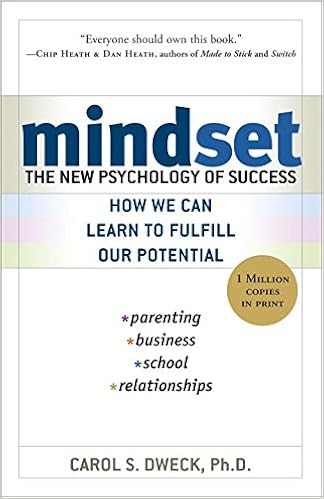
Her work counters the praise-ridden self-esteem movement and shows that tackling something challenging helps the brain to grow. People who adapt to this "growth mindset" - where they want to take on challenges and do not expect the immediate gratification of instant success - are more likely to find long term happiness and success.
The opposite of this Growth Mindset is what she calls the "fixed mindset." People with a fixed mindset believe intelligence is inborn, that one's superiority is evident and manifest without much effort. People with a fixed mindset have a hard time recovering from failure.
I'd like to see more parents apply this Growth Mindset to bilingual education for their kids. It's not easy to learn 2 languages (or even more) while you're a kid. Success takes hard work, and enduring difficulties which means not always feeling good. When your child is feeling discouraged in the classroom or in the face of the entire daunting challenge, Dweck is urging you to guide your child through these feelings - Help your child take on a growth mindset to believe that through repeated effort, s/he can overcome these feelings of discouragement. Eventually, they will transform into feelings of gratification. But only after slogging through the columns of repeated character writing.
I hope Mandarin teachers take this message to heart and stop teaching to low-to-mediocre standards. Tell American parents the truth. Expect more from your students and don't take back down. So what if many of your students are getting B's and C's? If you required your students to write one full page, then stick to that standard. If they only write half the amount on an essay, then let them know by giving them a lower grade. Then it is up to the parents and the students to work together and learn to acquire this growth mindset.
The irony in all this is that hard work and not being coddled is actually a natural aspect of the Chinese culture.
As Dweck writes in her book, "Many people with the fixed mindset think the world needs to change, not them. They feel entitled to something better..." Exactly. Herein lies the problem - Entitlement.
There's no entitlement in learning another language. Either you do it, or you don't, and you can use it, or you cannot. Being able to use that second language doesn't happen just because you showed up. Dweck's research has been unequivocal on this simple point: To achieve anything, you have to work for it. So take on a Growth Mindset, and get to work.

No comments:
Post a Comment